Naivasha Travel Guide: The Complete, Honest Guide to a Great Trip (2026)
Naivasha is a lake town in Kenya’s Rift Valley, about 90 km northwest of Nairobi and 1.5 to 2.5 hours away by road. People come for Lake Naivasha’s hippos and birdlife, the walking safari on Crescent Island and cycling through Hell’s Gate National Park. It works best as a two or three-night trip, and a simple weekend for two can cost around KSh 11,000 before food if you stay in town and pay citizen park rates (as of October 2026).
This Naivasha travel guide covers everything you need to plan a trip: how to get there, where to stay, what to do, what it costs, when to go and the honest downsides nobody puts on a brochure.
Key takeaways
| What you need to know | The short version (as of October 2026) |
|---|---|
| Distance from Nairobi | About 90 to 105 km by road, 1.5 to 2.5 hours |
| Getting there | Car, matatu (about KSh 250 to 350 each way) or shuttle |
| Where to stay | Town for budget and convenience; Lake View or Moi South Lake Road for views and nature |
| Top things to do | Boat ride, Crescent Island, Hell’s Gate, Mount Longonot |
| Driest months | January, February, July and September |
| Wettest month | April (about 140 mm of rain) |
| Weekend budget for two | From about KSh 11,000 before food (town stay, citizen rates) |
In this guide
- Why visit Naivasha (and who it isn’t for)
- Lake Naivasha in a nutshell
- How to get to Naivasha from Nairobi
- Getting around once you’re there
- How long to stay
- Where to stay in Naivasha
- Top things to do in Naivasha
- Best time to visit Naivasha
- Worked example: what a Naivasha weekend costs
- Safety and practical tips
- Pros and cons of a Naivasha trip
- Plan your trip
- Naivasha travel guide: FAQs
Why visit Naivasha (and who it isn’t for)
Naivasha is the easiest real break from Nairobi. In under three hours you swap traffic for a freshwater lake ringed by volcanoes, with giraffes, zebras and hippos close enough to watch from a boat or on foot. It’s one of the few places in Kenya where you can walk among wildlife without a game drive vehicle.
It also suits a wide range of trips. Couples come for quiet weekends with a view, families for boat rides and cycling, groups for birthdays and team building, and companies for conferences.
Now the honest part. Naivasha isn’t a classic big-five safari. You won’t see lions or elephants at Crescent Island or Hell’s Gate. On holiday weekends and during big events, the town and main road get crowded and prices rise. And the Nairobi to Naivasha road can be slow, especially on Sunday afternoons when everyone heads home at once. If you want the Maasai Mara experience, this isn’t it. If you want an easy, scenic break with wildlife on foot, it’s hard to beat.
Lake Naivasha in a nutshell
Lake Naivasha is a shallow freshwater lake, which is unusual in a valley full of salty soda lakes. It’s fed by the Malewa and Gilgil rivers, which drain the Aberdare mountains, and it sits at about 1,890 m above sea level. Since 1995 it has been listed as a wetland of international importance under the Ramsar Convention, the global treaty that protects important wetlands.
The lake also supports Naivasha’s flower farms, fishing and the geothermal power plants at Olkaria, so you’ll see farms and industry alongside the wildlife. Lake levels have risen in recent years, which has flooded parts of the shoreline and shrunk Crescent Island.
How to get to Naivasha from Nairobi
You have three realistic options. Here’s how they compare, using prices reported in mid-2026.
| Option | Time | Typical cost | Good for |
|---|---|---|---|
| Own car | 1.5 to 2.5 hours | Fuel | Lake View and South Lake stays, flexibility |
| Matatu (14-seater) | About 1.5 to 2.5 hours | KSh 250 to 350 each way, more on peak dates | Budget trips staying in town |
| Shuttle | About 1.5 to 2.5 hours | KSh 300 to 450 each way | A little more comfort than a matatu |
| Taxi or private transfer | 1.5 to 2.5 hours | KSh 6,000 to 9,000 one way for a sedan | Groups splitting the cost, airport arrivals |
The main route is the Nairobi to Nakuru highway (the A104) via Limuru. It’s in good condition but busy with trucks. Leave Nairobi before 7 am or after 9 am to avoid the worst traffic, and avoid driving back between 4 pm and 7 pm on a Sunday if you can.
Matatus and shuttles from Nairobi’s CBD drop you in Naivasha town. If you’re staying by the lake, you’ll need a taxi, boda boda (motorbike taxi) or a local matatu along Moi South Lake Road, which runs towards Kongoni in about an hour.
There is also a train option: the SGR stops at Suswa, about 35 km southwest of Naivasha town, not in town itself, so you’ll still need a road transfer at the other end.
Getting around once you’re there
This is the part of planning most people skip, and it’s the one that catches them out. Naivasha town, the lake and the parks are spread over a wide area, and public transport between them is basic.
- Your own car is the easiest option by far. It lets you stay anywhere, visit Hell’s Gate and the lakeshore on your own schedule and stock up at the supermarkets in town.
- Local matatus run from town along Moi South Lake Road towards Kongoni, passing the turn-off for Hell’s Gate. They’re cheap but slow and less frequent later in the day.
- Taxis and ride-hailing work around town. Agree the fare before you set off for longer trips to the lake.
- Boda bodas (motorbike taxis) are everywhere and good for short hops. Ask for a helmet, and avoid them at night or on wet roads.
The practical rule: if you don’t have a car, stay in town and book activities with a pick-up included. If you do have a car, the Lake View area and South Lake open up.
How long to stay
One night is enough for a quick change of scene, but you’ll spend a lot of it on the road. Two nights is the sweet spot for most people: arrive Friday evening, spend Saturday on the lake and Crescent Island, and do Hell’s Gate early on Sunday before driving back. Three or four nights lets you add Mount Longonot and slow down properly. Any Naivasha travel guide that tells you to “do it all in a day” from Nairobi is underestimating the traffic.
Where to stay in Naivasha
Where you stay shapes the whole trip, because Naivasha is spread out. Town is cheap and convenient but has no lake views. The Lake View area gives you bigger homes and sunsets over the water. Moi South Lake Road puts you closest to Hell’s Gate and the lakeshore, mostly in lodges and camps.

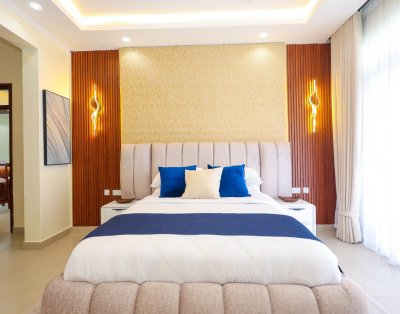
On Likizo, prices currently range from about KSh 2,500 a night for a one-bedroom apartment in town to KSh 30,000 for a lake-view villa (as of October 2026). We compare every area, with prices and downsides, in our guide to where to stay in Naivasha. If you already know what you want, you can compare Naivasha homes on Likizo on one page.
Top things to do in Naivasha
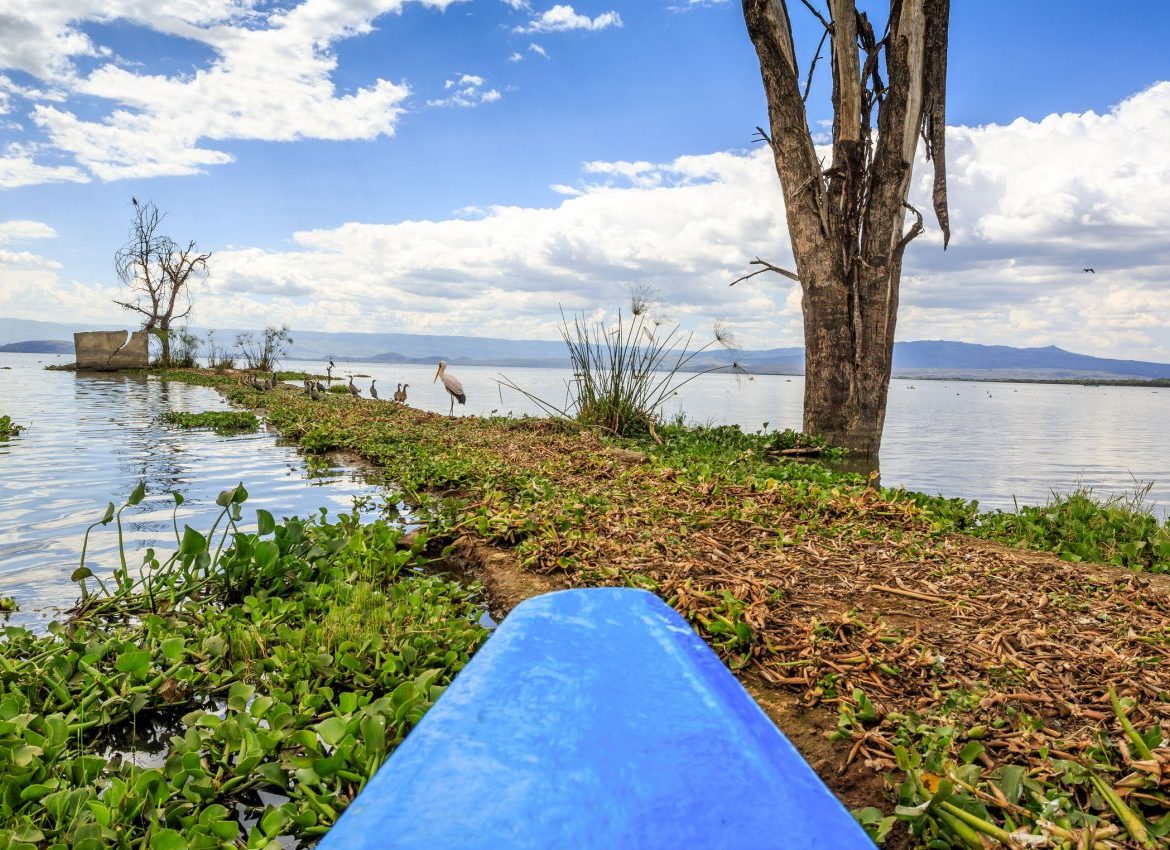
Take a boat ride on Lake Naivasha
A boat ride is the classic Naivasha activity and the easiest way to see hippos up close (from a safe distance) and the lake’s birdlife, including fish eagles. Rides usually last about an hour. One local operator, Katrue Boat Ride, lists shared group rides from KSh 1,000 per person per hour, with private charters priced separately (as of mid-2026). Early morning, roughly 6.30 to 9 am, usually brings calmer water and more active wildlife, and late afternoon is best for sunsets.
Honest tip: agree the price, the length of the ride and whether it’s per person or per boat before you get in. Life jackets should always be provided. If they aren’t, walk away.
Walk with giraffes on Crescent Island
Crescent Island is a private game sanctuary in the lake where you can walk among giraffes, zebras, wildebeest, waterbuck and antelope. There are no big predators, which is why walking is allowed. You reach it by boat, and the island is open from 8.30 am, with last entry at 4.30 pm.
Entry for 2026 is listed at KSh 800 for Kenyan citizens, KSh 1,100 for Kenyan residents and USD 33 for non-residents (adults), with reduced child rates. You pay at the island, not to the boat operator. Keep about 10 to 15 metres from the animals, especially giraffes and buffalo.
Cycle through Hell’s Gate National Park
Hell’s Gate is a small national park (about 68 km²) south of the lake, famous for its red cliffs, the Fischer’s Tower rock pillar, rock climbing, the Obsidian Caves and the Olkaria geothermal area. It’s one of the few Kenyan parks where you can cycle or walk among zebra, buffalo and gazelle. Gates open at 6 am and close at 6 pm.
The Kenya Wildlife Service lists daily entry at KSh 500 for East African citizens, KSh 675 for Kenyan residents and USD 50 for non-residents (adults), under the conservation fees that took effect in October 2025.
Honest tip: the gorge walk is the highlight, but gorges can flood fast when it rains upstream. Skip the gorge in wet weather and follow ranger advice.
Hike Mount Longonot
If you want a proper workout, Mount Longonot National Park is a dormant volcano near Naivasha with a hike up to and around the crater rim. The climb is steep and dusty, so bring water, sun protection and decent shoes. KWS lists the same fees as Hell’s Gate: KSh 500 for East African citizens, KSh 675 for residents and USD 50 for non-residents. Gates open from 6 am to 6 pm.
Slow down at your stay
Plenty of people come to Naivasha to do very little, and that’s a perfectly good plan. A home with a garden or a balcony facing the lake, a barbecue and a fire on a cold night is half the appeal. Evenings here get cool, often dropping to around 8°C, so a home with a fireplace or warm bedding is worth having.
Best time to visit Naivasha
Naivasha is a year-round destination, but the weather does shape the experience. Daytime highs stay mild, roughly 20°C to 26°C, while nights are cold, usually between about 7°C and 11°C.
| Season | Months | What to expect |
|---|---|---|
| Driest and sunniest | January to March | Warmest days (about 25°C to 26°C), little rain, great for Hell’s Gate and Longonot |
| Long rains | April and May | Wettest time; April averages about 140 mm of rain over 22 days. Muddy roads, gorge closures possible |
| Cool and dry | June to September | Coolest days (about 20°C to 22°C) and cloudier skies, but low rainfall |
| Short rains | October to December | More showers, especially November, but usually short. Busy over Christmas |
Climate figures are long-term averages from Weather2Travel, so treat them as a guide, not a forecast. For crowds, the busiest times are Christmas and New Year, Easter, long weekends and the WRC Safari Rally, which is based in Naivasha and runs from 18 to 21 March 2027. Book early for any of those.
Worked example: what a Naivasha weekend costs
Here’s a realistic two-night weekend for a couple of Kenyan citizens staying in town and travelling by matatu. Prices are as of October 2026.
| Item | Calculation | Cost for two |
|---|---|---|
| Accommodation | One-bedroom apartment in town, KSh 2,500 x 2 nights | KSh 5,000 |
| Matatu to and from Nairobi | About KSh 300 x 2 people x 2 trips | KSh 1,200 |
| Boat ride | KSh 1,000 per person, shared ride | KSh 2,000 |
| Crescent Island entry | KSh 800 per citizen adult | KSh 1,600 |
| Hell’s Gate entry | KSh 500 per East African citizen | KSh 1,000 |
| Total | Before food, local transport and bike hire | KSh 10,800 |
On top of that, add food, taxis or boda bodas between town and the lake, and bike hire at Hell’s Gate if you want it. Non-residents pay much more for park and island entry (USD 50 and USD 33 per adult), so the same weekend costs considerably more for international visitors.
Travelling as a group changes the maths in your favour. Seven people sharing a three-bedroom bungalow at KSh 7,000 a night pay about KSh 1,000 each per night, far less than a hotel.

Safety and practical tips
- Respect the hippos. Hippos leave the water at night to graze on lakeshore lawns and are dangerous on land. Don’t walk near the water after dark, and don’t swim in the lake.
- Pack layers. Days are pleasant, but nights are cold. Bring a fleece or jumper even in the dry season.
- Carry cash and M-Pesa. Crescent Island takes cash and M-Pesa but not cards. Park fees are paid cashless.
- Plan around traffic. Sunday afternoon on the way back to Nairobi is the slowest drive of the week.
- Check road access if your stay is up an estate road and it has been raining.
- Book peak dates early. Christmas, Easter and the Safari Rally fill homes and hotels fast, and prices rise.
Pros and cons of a Naivasha trip
Pros
- Close to Nairobi, so a weekend is easy
- Wildlife on foot and by bike, which is rare in Kenya
- Something for couples, families, groups and solo travellers
- A wide range of stays, from KSh 2,500 apartments to lake-view villas
Cons
- No big-five safari, so it’s not a substitute for the Maasai Mara
- Crowded and pricier on holidays and event weekends
- Spread out, so you’ll need transport between town and the lake
- Higher park and island fees for non-residents
Plan your trip
Start with where you’ll stay, since that decides how you’ll get around. Read our honest comparison of where to stay in Naivasha, then browse Airbnbs in Naivasha on Likizo, from town apartments like the Rehema apartment on Kenyatta Avenue to family homes like Kathy’s Place with lake views.
Naivasha travel guide: FAQs
Two nights is ideal for most people. That gives you a full day for a boat ride and Crescent Island and a morning for Hell’s Gate before you drive back. Add a night or two if you also want to hike Mount Longonot or simply relax.
A two-night weekend for two Kenyan citizens staying in a town apartment and travelling by matatu costs about KSh 10,800 before food, covering accommodation, transport, a boat ride, Crescent Island and Hell’s Gate entry (as of October 2026). Non-residents pay more for park and island fees.
You can, but it’s rushed. The drive takes 1.5 to 2.5 hours each way, so a day trip leaves time for only one or two activities. Staying at least one night is far more relaxing.
Yes. Boat rides, walking among giraffes on Crescent Island and cycling in Hell’s Gate all work well for children, and the park and island have reduced child rates. Keep children well away from the lakeshore at night because of hippos.
January to March is the driest and sunniest period, which suits hiking and cycling. April and May are the wettest months. Naivasha is busiest over Christmas, Easter and the Safari Rally, which runs from 18 to 21 March 2027.
Prices, fees, transport costs and listings in this guide were checked in October 2026 and can change. Park fees come from the Kenya Wildlife Service and climate figures from Weather2Travel. Always confirm current prices before you travel.